
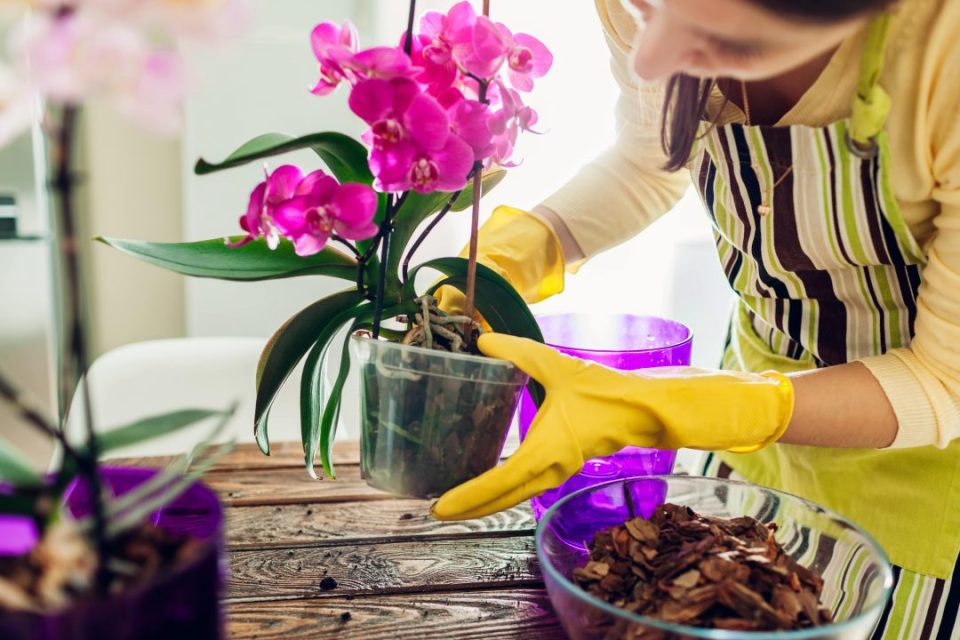
The orchid is a unique plant in many respects; there are more than 880 types, called genera, and 22,000 species. The majority of orchids are tropical plants that live as ‘air plants’ by hanging on to trees for support, while some orchids grow on rocks and a few species grow on the forest floor. With such a varied species, it is difficult to provide correct information for good orchid care.
Additional support
When an orchid plant connects with a tree, it is not parasitic; it is only using the tree for physical support, it gets the nutrients it needs from the air; moisture and food can be collected and stored for future use. Orchids have to endure long periods of dryness and they have special compartments called pseudobulbs that store water and nutrients.
Potting orchids
We need to understand that orchids are not ideally suited to growing in pots; many species have their roots in the open in order to gather up dampness and nutrients. If you see the roots starting to grow outside of a container, do not worry, this is perfectly natural. If, for example, you have an Adenium plant Thailand farm, you should follow the grower’s advice, as they know what the species needs. Clear plastic pots are great because you can see the root system and this is what we recommend for potted orchids.
Orchid fertilizers
This is a critical aspect of caring for orchids and you need to use a brand that is specifically for orchids, which does not contain Urea, which is not good for orchids. Indeed, orchid growers recommend a weak mixture of fertilizer and feeding should be weekly, hence the popular term, ‘weakly, weekly’. Flood the roots with water, which actually helps the plant by storing water for later.
Humidity and air movement
While orchids do not like being wet, they do thrive in humid conditions and when indoors, you should place them on humidity trays. Orchids grow well when their roots are directly above water and humidity trays are perfect for optimum growth. Another thing that orchids like is air flow, so make sure your plants are not in a still environment.
Light requirements for orchids
The orchid family have varied light needs; some species prefer high light, while others like low light conditions; even high light orchids do not like too much direct sunlight, so shady areas are preferred. Of course, if your orchids are potted, you can experiment and observe growth. Wait for at least 7 days to see a noticeable change.
To summarize, orchid care can vary greatly and the Internet hosts a wealth of resources to help novice growers understand the needs of their plants. There are reputable online growers in Thailand that have many orchids for sale and they are very helpful, freely giving you essential information to help you provide the best growing environment.
